


There are several options available for shipping kittens to their new homes.
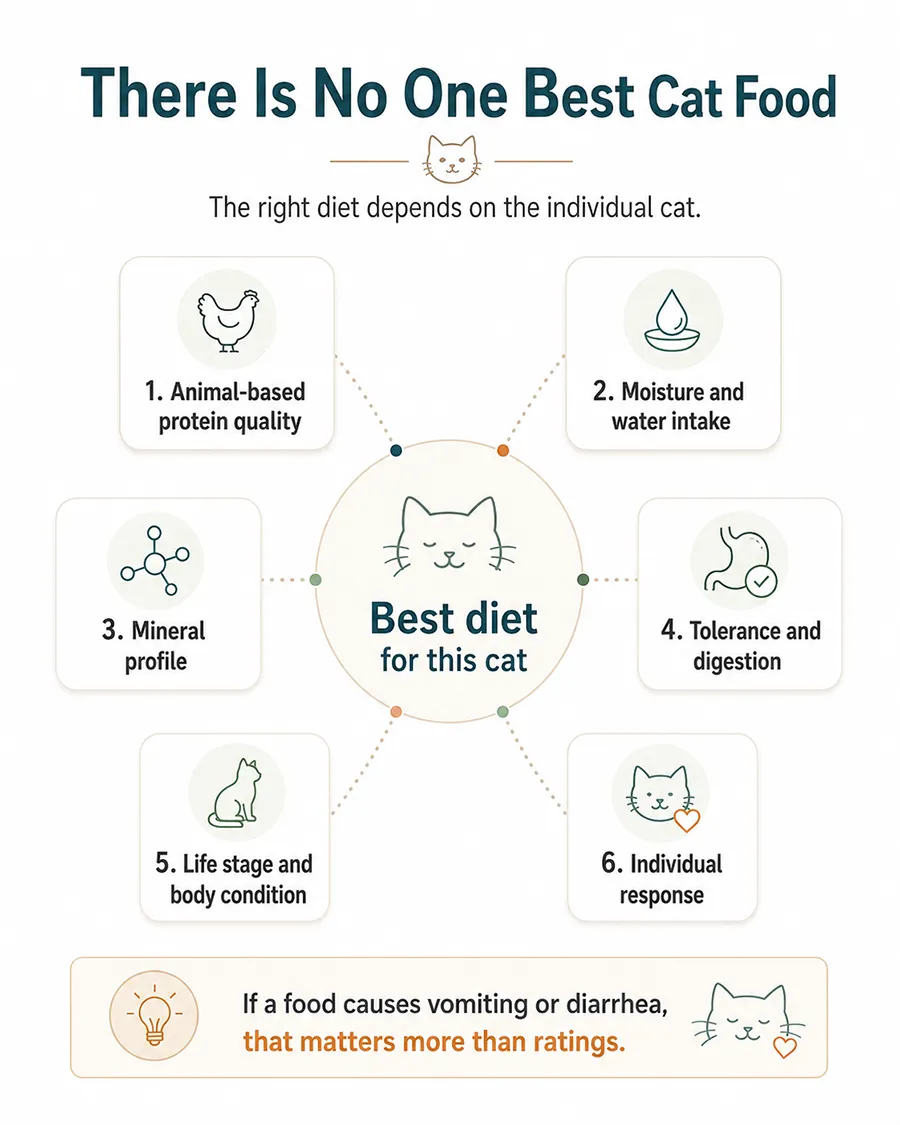
This is one of the most common questions that kitten owners ask me. Many people expect to hear the name of a specific brand or to get a list of the “best foods.” However, my answer usually disappoints them: there is no universal answer.
Over more than fifteen years of working with cats, I have seen many arguments about nutrition. Some owners are convinced that dry food is the best choice. Others believe that wet diets are the only correct option. Others prefer raw feeding or homemade food. At the same time, each side can bring its own arguments, studies, and personal experience.
The truth is that modern science about animal nutrition is still developing. We know much more than we knew twenty or thirty years ago, but we still cannot answer many questions about long-term daily feeding of cats with full confidence. Some ingredients look safe and useful today, but their effect on health over ten or fifteen years may be more complex than it seems at first glance.
That is why I try to avoid categorical statements that one food is “ideal” and another is “bad.” Instead, I prefer to analyze the diet as a whole and pay attention to factors that can really affect a cat’s health in the long term.
In this article, I will explain why the question of nutrition is much more complex than choosing between several popular brands, what lessons we can learn from past mistakes in the pet food industry, and what indicators I personally look at when evaluating a diet.
I do not believe in simple answers. The history of pet food has shown more than once that the effect of individual diet components can be much more complex than it seems at first glance. It also depends on the individual characteristics of the cat itself. Sometimes even the most expensive and fashionable food causes diarrhea or vomiting, and it is hard to argue with that. The reaction of a specific animal is always more important than ratings.
What We Know About Cat Food Ingredients
A good example is the history of dilated cardiomyopathy (DCM) in dogs. For many years, grain-free foods were considered one of the most progressive directions in the pet food industry. Owners were told that grain was an unwanted ingredient and that diets with a high meat content and without grain components better matched the natural needs of animals.
However, in 2018, the FDA began investigating reports of dilated cardiomyopathy in dogs that may have been connected to certain diets. Specialists paid special attention to the fact that many affected animals did not belong to breeds genetically predisposed to this disease. As data accumulated, many reported cases involved dogs eating grain-free or other non-traditional diets that often contained legumes such as peas, lentils, chickpeas, or similar ingredients[1].
To this day, scientists have not reached a common opinion about the exact mechanism behind these cases. Moreover, the investigation did not prove that any specific ingredient by itself causes the disease. Still, this story made specialists pay attention to nutrient absorption and taurine metabolism.
Although cats were not the main group of animals affected by this outbreak, research on taurine metabolism in cats became especially relevant. Taurine is an essential amino acid for cats. Its deficiency can lead to retinal degeneration and heart disease. At first glance, it may seem that it is enough to simply make sure the food contains the necessary amount of taurine. However, studies show that everything is much more complicated.
In one study on cats, researchers looked at whether a specific dietary component, full-fat rice bran, could affect taurine status[2]. Full-fat rice bran, meaning rice bran with the fat fraction preserved, was added to the experimental diet, and then changes in blood taurine levels were evaluated.
Despite the presence of taurine in the diet, cats had a lower concentration of taurine both in blood plasma and in whole blood[2]. The authors suggested that this effect could be connected with increased taurine loss through the intestines. One possible mechanism they named was increased excretion of taurine-conjugated bile acids in the feces, as well as a possible effect of rice bran on the intestinal microbiota.
Because in cats, bile acids are mostly conjugated with taurine, an increase in fecal loss of taurine-conjugated bile acids can increase the need for taurine, even when the amount of taurine in the diet seems sufficient.
This example shows very well why overly simple conclusions are dangerous in cat nutrition. An ingredient does not exist in a diet by itself. It can change the absorption, loss, or need for certain nutrients. That is why statements like “this ingredient is useful” or “this ingredient is harmful” often oversimplify real biology. For cats, it is especially important to evaluate not only the ingredient list but also how the whole formula affects metabolism.
In recent years, a huge number of diets have appeared on the market that contain ingredients that twenty years ago were hard to imagine in cat food. Today, you can find formulas with kiwi, papaya, bananas, mango, pomegranate, berries, and dozens of other exotic components. Manufacturers often present these ingredients as an advantage. At the same time, many of these foods are positioned as grain-free.
The argument usually sounds almost the same: cats are predators and do not eat grain in nature. Often, it is convenient for the manufacturer to use legume protein so that the total protein number in the food is higher. That is also where the promotion of grain-free formulas came from.
If we believe that a diet should be as close as possible to a cat’s natural diet, then why does the presence of rice or barley get criticized, while the presence of papaya, banana, or kiwi is seen as a benefit?
Cats really are obligate carnivores. In natural conditions, the base of their diet is small animals. They do not hunt bananas, collect papaya, or eat exotic fruit. Personally, I treat these trends with enough caution. This does not mean that papaya or banana is necessarily harmful to cats. Today, we simply do not have convincing data that would allow us to say that regular long-term eating of such ingredients does not cause cats any harm.
Moreover, the longer the list of plant ingredients becomes, the more often I have a question about possible food sensitivity and individual intolerance. Every new ingredient is an additional set of biologically active compounds that the animal’s body will interact with every day for many years.
Why does nutrition have huge importance?
In breeding work, I often face a situation where almost any health problem is automatically explained by genetics. A cat gained extra weight, developed diabetes, got urinary system problems, developed heart disease, had digestive problems — genetics is blamed.
Of course, heredity plays a huge role. As a breeder, I understand very well the importance of genetics, responsible selection, and genetic testing of breeding cats. However, over the years of working with cats, I have come to the conclusion that many people greatly overestimate the role of genes and, at the same time, underestimate the influence of the environment.
Genetics sets certain starting conditions. But how these conditions are realized during the animal’s life depends a lot on nutrition, body weight, level of physical activity, water intake, and living environment.
One of the most underestimated factors in the development of health problems is nutrition. As we said earlier, taurine has vital importance for cats. Today, taurine deficiency happens much more rarely, but it remains a great example of how strongly nutrition can affect the health of the heart and eyes.
Besides taurine, omega-3 fatty acids, especially EPA and DHA, also play an important role. They participate in the regulation of inflammatory processes and help support normal cardiovascular function.
Another factor that directly affects the heart is body weight. Obesity cannot be viewed as only a cosmetic problem. Fat tissue is an active endocrine organ and affects metabolism in the whole body. Cats with extra weight have a much higher risk of developing diabetes. Joints and the spine receive extra load. The liver has to work in conditions of changed metabolism. In most cases, the cause of obesity is not genes, but chronic excess calories and not enough physical activity.
A similar situation can be seen with kidney disease. When owners discuss kidney health, the conversation often comes down only to the amount of protein in the food. In practice, the picture is much more complex. One of the most important indicators is the level of phosphorus in the diet. Excessive phosphorus intake over a long period of time can increase the load on the kidneys, especially in older animals.
The calcium-to-phosphorus ratio is also no less important. These minerals are closely connected with each other, so evaluating one indicator without the other does not make much sense.
However, even a perfectly selected diet cannot fully compensate for insufficient water intake. A common practical guideline is around 40–60 ml of total fluid per kilogram of body weight per day, including moisture from food[5]. For a cat weighing 4–5 kg, this is approximately 160–300 ml of fluid daily.
It is important to understand that we are talking about total fluid intake. If a cat eats wet food, a large part of this need is already covered by the diet itself. Wet food often contains around 75–80% moisture, which is why it can contribute meaningfully to a cat’s daily fluid intake[5]. So one portion of canned food can provide part of the daily water requirement.
The situation looks completely different when a cat eats only dry food. In this case, almost the entire need for fluid has to be covered by drinking water. Unfortunately, many owners underestimate how picky cats can be about water. Some cats refuse to drink from bowls that are not washed well. Others are scared away by the smell of plastic, detergent residue, the smell of food that got into the water, or even other smells in the room.
Although the main topic of this article is nutrition, we briefly touched on the topic of smells, and here I cannot avoid saying that many owners use scented candles, diffusers, essential oils, and air fresheners without thinking that cats have unique features in the metabolism of some chemical compounds.
Some essential oils and liquid potpourri products can be toxic to cats, especially because cats are more sensitive to certain compounds that are metabolized through the liver[6]. Other aromatic substances may create an additional load on the body’s detoxification systems, including the liver. That is why a cat’s health depends not only on what is in her bowl. What she breathes every day is also very important.
That is why I am always surprised when health problems are automatically blamed only on genetics. Moreover, more than once, I have faced situations where it was enough to mention to a veterinary specialist that the cat was purebred, and genetics became the main explanation for almost any problem.
Of course, hereditary diseases exist. That is why complex genetic tests for breeders exist, so cats with genetic diseases are not used in breeding. However, not every disease in a purebred cat is genetic by nature.
What I personally pay attention to when choosing food
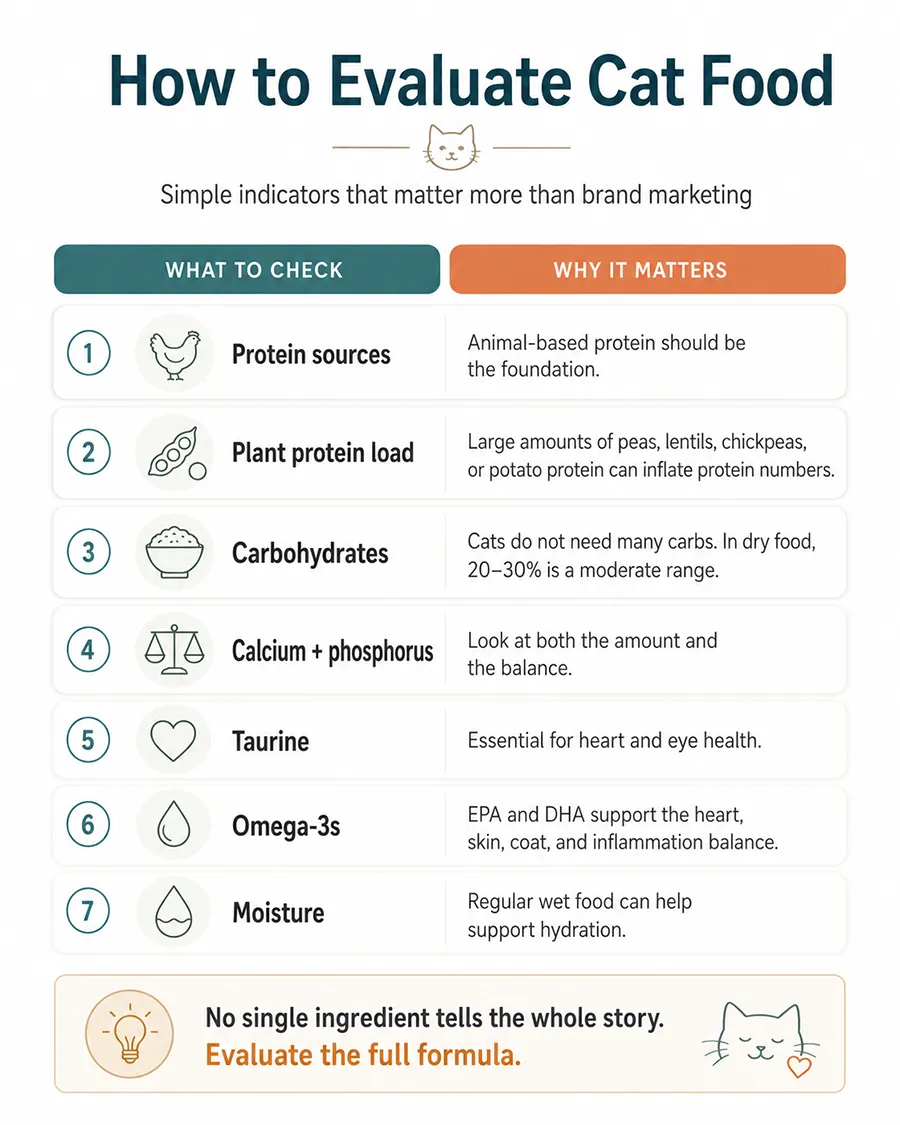
I try to evaluate food as a whole. I am not interested in the brand name or marketing claims on the package. It is much more important how well the diet matches the biological needs of the cat.
Protein sources
The first thing I look at is protein sources. According to AAFCO Cat Food Nutrient Profiles, adult maintenance diets list a minimum of 26% crude protein on a dry matter basis, while growth and reproduction diets list 30%[3]. However, the percentage of protein by itself says very little.
For example, two foods can contain the same 38% protein. But in one case, the main ingredients will be meat, meat meals, organs, and fish. In another case, a large part of the protein may come from peas, lentils, chickpeas, potato protein, or other plant sources. That is why I am interested not only in the amount of protein, but also in its origin.
A good-quality meat meal is not a bad ingredient. On the contrary, it is a concentrated source of animal protein from which most of the water has already been removed. Sometimes a meat meal can provide more animal protein than fresh meat that stands first on the ingredient list.
Ratio of animal and plant protein
Unfortunately, manufacturers rarely disclose this indicator directly. If, after the first one or two meat ingredients, there are immediately peas, lentils, chickpeas, potato protein, pea protein concentrate, or several types of legumes in a row, I have a question: what part of the declared protein really has animal origin?
This does not mean that plant ingredients are automatically bad. But the cat remains an obligate carnivore, and personally, I prefer diets where the base of the protein profile comes from animal sources.
Carbohydrates
Carbohydrates are not considered an essential nutrient for cats. This does not mean that carbohydrates are harmful. It just means that a cat’s physiological need for them is much lower than in many other animal species.
For dry foods, I usually use approximately these numbers: up to 20% carbohydrates is a low level; 20–30% is a moderate level; more than 35% is a high level.
A high percentage of carbohydrates by itself does not make a food bad. However, if at the same time the formula contains a large amount of legumes, potatoes, or other plant components, there are questions about how well such a recipe matches the biological needs of a cat.
Calcium and phosphorus
If the manufacturer publishes an extended analysis, I always look at calcium and phosphorus. And if it is not published on the package, I go to the official website to look for the nutrient profile.
The minimum phosphorus content according to AAFCO standards is around 0.5% on a dry matter basis. However, the upper limit is basically not established. In practice, dry foods can have values from 0.8% to more than 2%. Personally, I prefer diets where phosphorus is approximately in the range of 0.8–1.2%.
Calcium-to-phosphorus ratio
It is also important to look not only at the absolute numbers, but also at their ratio. In FEDIAF’s guidelines for complete cat foods, the calcium-to-phosphorus ratio is listed from 1:1 up to 2:1 for adult maintenance[4].
In practice, many balanced foods are approximately within 1.1–1.5:1, although this is more of a practical guideline and not a separate official AAFCO standard.
Ash
Ash is not an ingredient. It is the total amount of mineral substances that remains after the organic part of the food is completely burned. This number includes calcium, phosphorus, magnesium, sodium, potassium, and other minerals.
For most dry foods, the ash level is usually in the range of 7–10%. When I see values higher than 11–12%, I begin to look carefully at calcium, phosphorus, and the general mineral profile. High ash does not automatically mean a bad food, but it requires a more careful evaluation of whether this ash level is suitable for your cat and whether it may create a load on her kidneys.
Taurine
Taurine is an essential amino acid for cats. AAFCO Cat Food Nutrient Profiles list minimum taurine levels of 0.10% for extruded or dry cat food and 0.20% for canned cat food[3]. However, as the study with rice bran shows, the presence of a certain amount of taurine on the package does not guarantee the same bioavailability of this substance.
That is why I look at taurine content as an important indicator, and for me, the higher the percentage of taurine, the better. Taurine overdose is not a concern. It does not accumulate in the cat’s body.
Omega-3 fatty acids
Another indicator I pay attention to is omega-3 fatty acids. The most important ones for cats are considered to be EPA (eicosapentaenoic acid) and DHA (docosahexaenoic acid), which are mostly found in fish and fish oil.
Omega-3 fatty acids participate in the work of the cardiovascular system and nervous system, support skin and coat health, and also participate in the regulation of inflammatory processes.
Unfortunately, many manufacturers still do not publish omega-3 content in the guaranteed analysis. If this information is available, I always pay attention to it. In many dry foods, the omega-3 content is in the range of approximately 0.2% to 0.8%. When the level gets close to 1% or goes above it, this usually means there is a noticeable presence of fish oil or other marine sources of omega-3.
I am also interested in the source of these fatty acids. Salmon oil, herring oil, and other marine ingredients usually give me more trust than unclear wording like “fish oil” without additional information.
Some owners additionally include omega-3 supplements in their cats’ diet. In some cases, this can be justified, especially if the main diet contains a small amount of marine fat sources. However, supplements should not be used as an attempt to compensate for an originally poorly balanced diet.
What type of food is best for cats?
Wet food vs dry food
If someone asked me to name one indicator that owners underestimate most often, I would choose diet moisture. Wet food usually contains around 75–80% water. Dry food contains approximately 8–12% moisture. This is a huge difference.
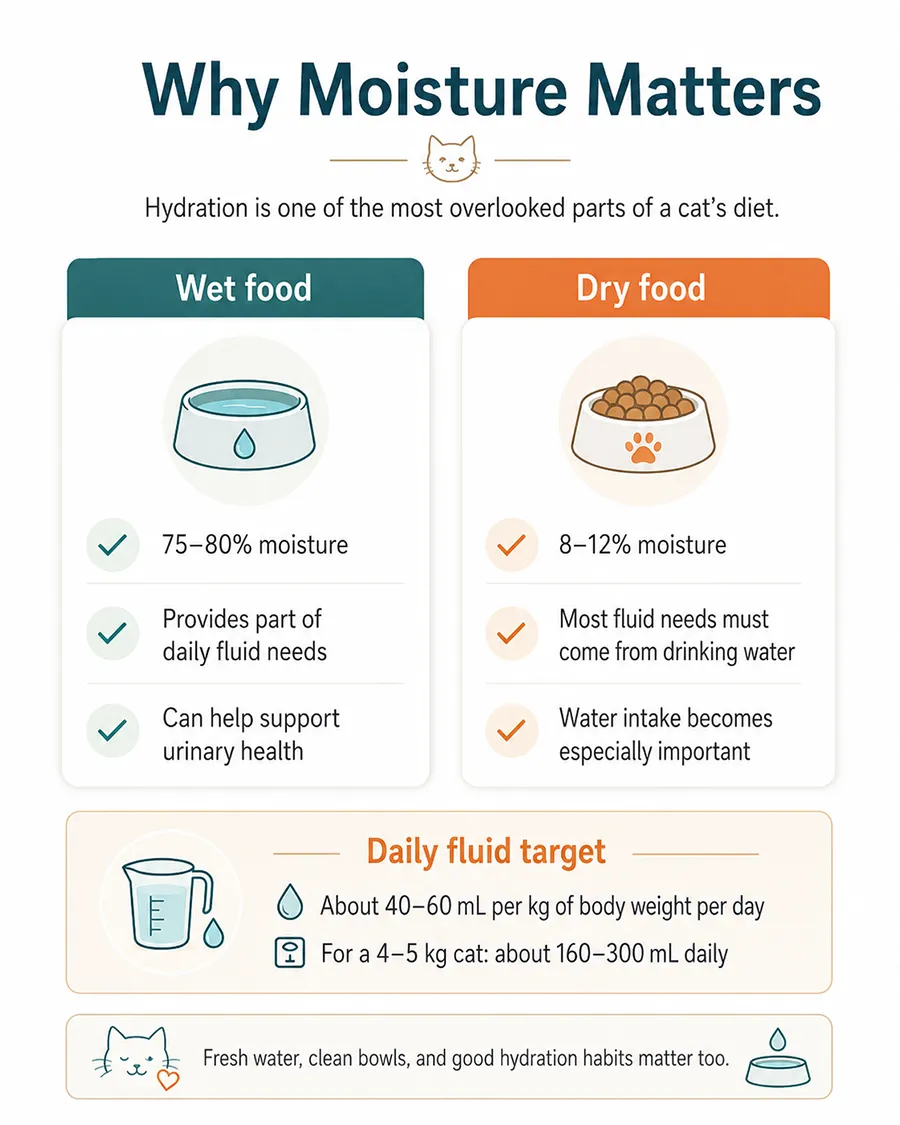
In my opinion, the regular presence of wet food in the diet often has a bigger effect on urinary system health than choosing between two high-quality dry foods of the same class.
That is why when I evaluate a diet, I look not only at the food composition, but also at the overall hydration level of the animal. In the end, I am not looking for the perfect brand. I am looking for a diet that gives the cat good-quality animal protein sources, a reasonable carbohydrate level, a balanced mineral profile, enough moisture, and good tolerance by the specific animal.
Raw diet
We remember that the cat is an obligate carnivore. In nature, she gets most nutrients from prey: muscle tissue, organs, brain, bones, and the stomach contents of the prey. That is why supporters of raw feeding often try to bring the diet as close as possible to the cat’s natural nutrition.
From the point of view of animal protein and moisture content, this logic is quite understandable. The main problem is the balance of the diet. The most common mistake is that people confuse a raw diet with simply feeding meat.
Meat by itself is not a complete diet for a cat. If you feed an animal only chicken breast, beef, or other types of meat without the correct balance of minerals and vitamins, deficiencies of calcium, some trace elements, and other important nutrients will develop very quickly.
That is why a complete raw diet usually requires either a carefully calculated recipe or the use of special vitamin-mineral premixes.
Another important point is microbiological safety. Raw meat can contain Salmonella, Campylobacter, Listeria, and other microorganisms. A healthy adult cat does not always get sick after contact with such bacteria, but it is impossible to completely remove the risk.
Also, the potential danger should be considered not only for the animal but also for people in the home, especially if there are small children, elderly people, or people with a weakened immune system.
Today, there are ready commercial raw diets that are positioned as complete diets. Their quality can vary a lot. If the manufacturer publishes a full analysis, information about meeting nutrition standards, and data on product safety control, this gives me more trust than recipes of unknown origin.
Sources and further reading
- U.S. Food and Drug Administration. “FDA Investigation into Potential Link between Certain Diets and Canine Dilated Cardiomyopathy.”
- Stratton-Phelps M, Backus RC, Rogers QR, Fascetti AJ. “Dietary rice bran decreases plasma and whole-blood taurine in cats.” Journal of Nutrition. 2002.
- Association of American Feed Control Officials. “AAFCO Dog and Cat Food Nutrient Profiles.”
- FEDIAF. “Nutritional Guidelines for Complete and Complementary Pet Food for Cats and Dogs.”
- Cornell Feline Health Center. “Hydration.”
- VCA Animal Hospitals. “Essential Oil and Liquid Potpourri Poisoning in Cats.”